In industrial production environments, seaports, fuel depots, or aquaculture farms, even a small oil leak can cause slippery surfaces, environmental pollution, and significant legal risks. Effective from February 10, 2026, Decision 04/2026/QĐ-TTg issued by the Prime Minister officially enacts the new Regulation on Oil Spill Response Operations. This regulation requires facilities to proactively equip materials, develop response plans, and be ready to respond close to the spill source.
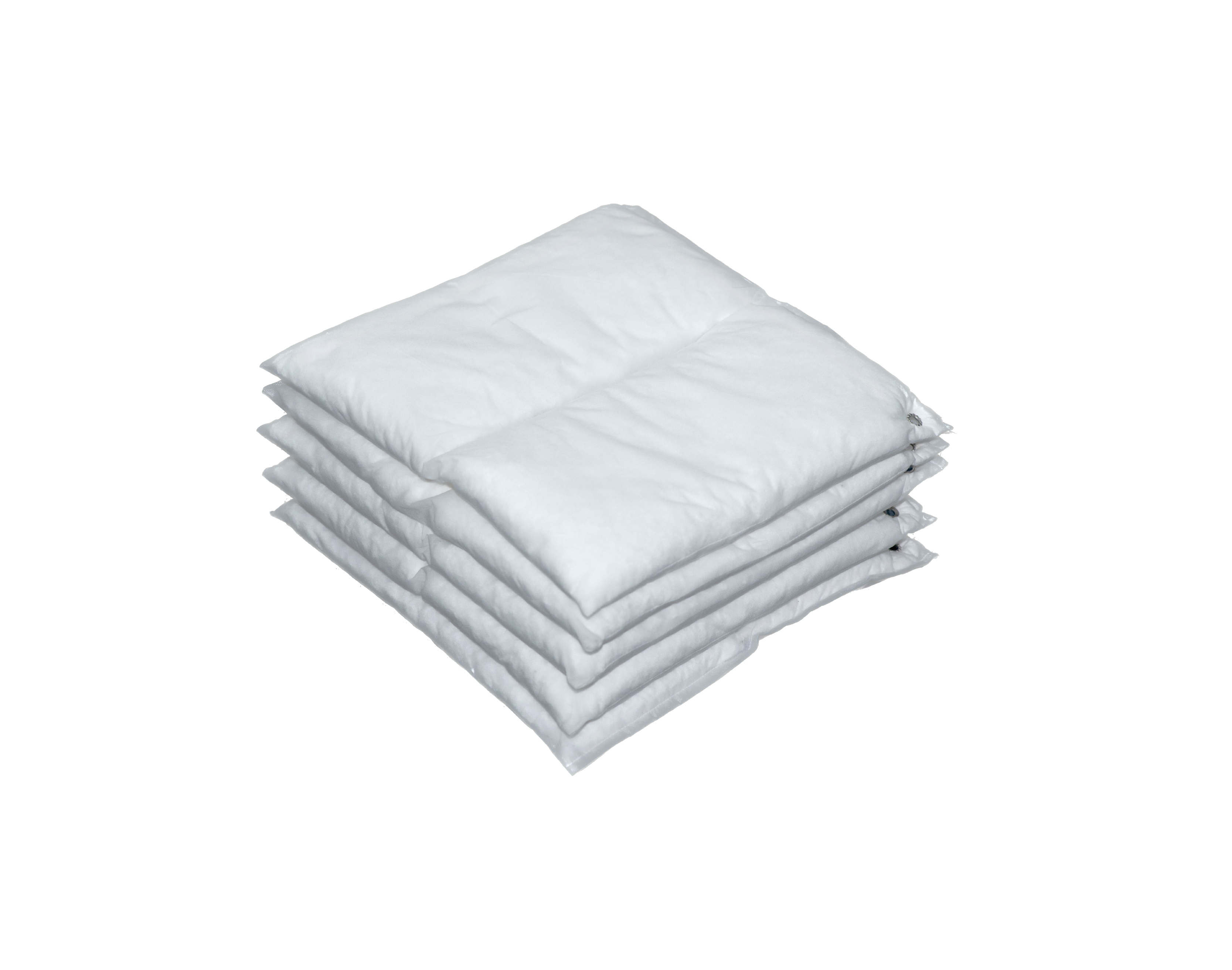
The N-Fiber Oil Absorbent Pillow by Bignanotech is specifically developed to address these challenges. The product applies Japanese nano-fiber technology, is 100% manufactured in Vietnam, selectively absorbs only oil (not water), offers high capacity, and is ideal for hard-to-reach locations. This article provides a detailed analysis of the technology, technical specifications, practical benefits, usage methods, and its connection to the latest legal requirements.
1. The Nano Technology Behind the N-Fiber Oil Absorbent Pillow – Why the Superior Performance?
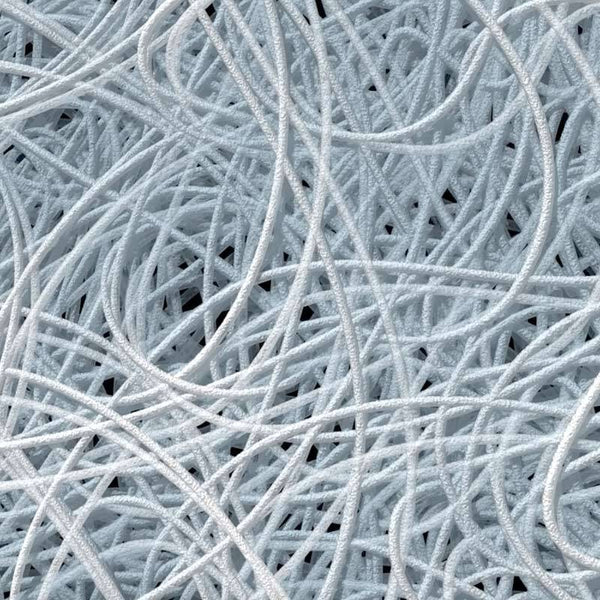
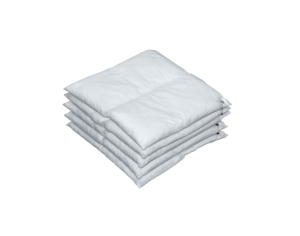
The N-Fiber Oil Absorbent Pillow is not an ordinary filled pillow. The core is made from 100% high-grade polypropylene, processed using Japanese Melt-blown nano technology. The fibers have a diameter of only 50–400 nanometers (200 to 800 times thinner than a human hair), forming a dense “spider-web” network with millions of ultra-fine nano pores.
This structure delivers three key advantages:
- Extremely strong capillary force that rapidly “pulls” oil into the interior.
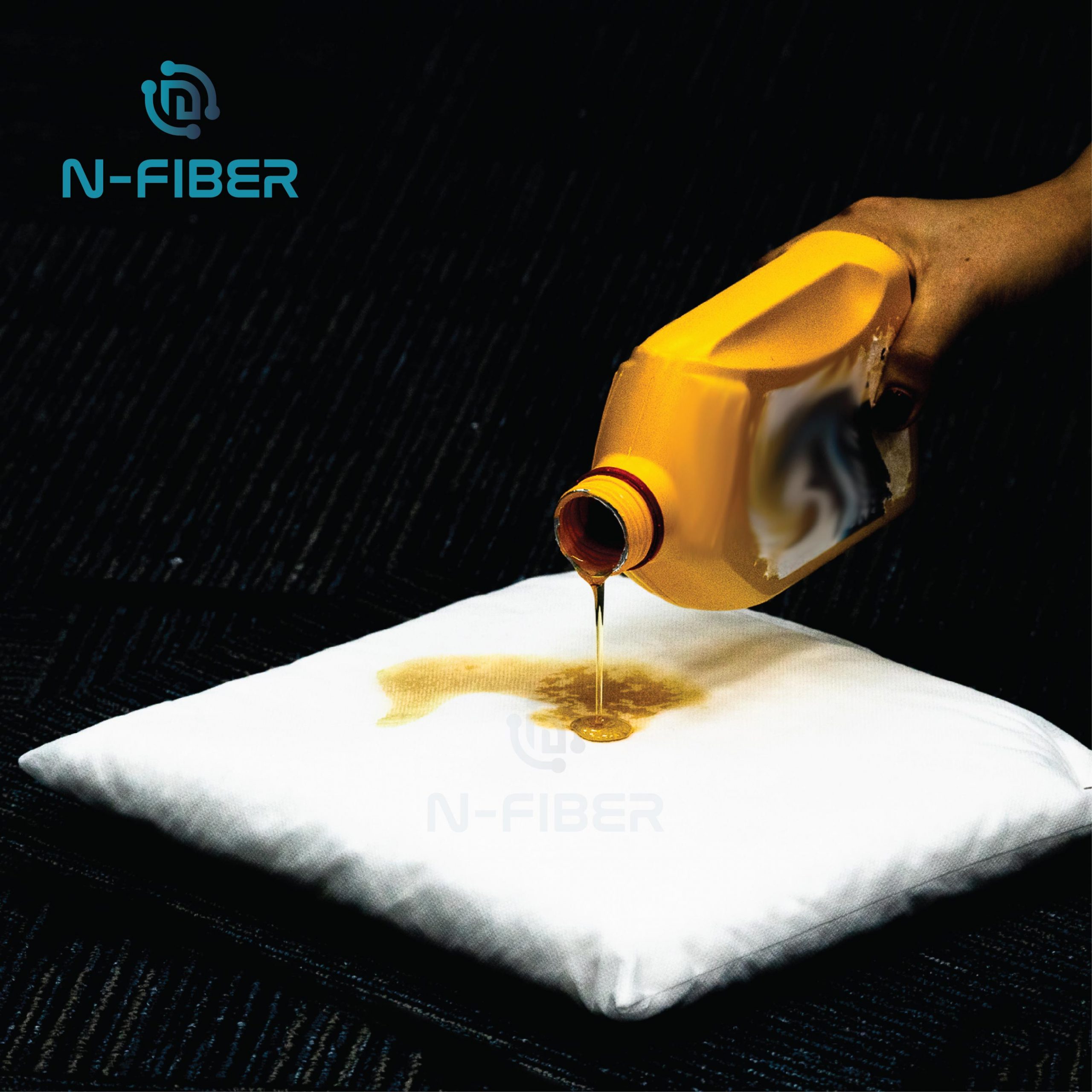
- Super oleophilic (oil-attracting) and super hydrophobic (water-repelling) surface → absorbs only hydrocarbons while completely rejecting water.
- Oil is securely locked inside by Van der Waals forces and the nano-pore structure, with almost no leakage even when the pillow is inverted or lightly compressed.
The outer cover combines spunbond non-woven fabric (approximately 80 g/m²) and tear-resistant polyester mesh (approximately 120 g/m²). This allows rapid oil penetration while protecting the core from tearing during real-world use. The product is anti-static treated, making it suitable for high fire-risk areas such as fuel depots or chemical plants.
Real-world results: average absorption capacity of 25–30 times its own weight, the majority of oil absorbed within the first 1–5 minutes, and buoyancy on water surfaces for more than 72 hours even when fully saturated.
2. Detailed Technical Specifications of N-Fiber Oil Absorbent Pillow Models
Below is the updated specification table based on Bignanotech manufacturer data (most popular models on the market):
| Product Code | Dimensions (cm) | Light Oil Absorption Capacity (liters/unit) | Heavy Oil Absorption Capacity (liters/unit) | Approximate Weight (g) | Packaging | Estimated Saturation Time |
|---|---|---|---|---|---|---|
| N-FIBER W20 | 20 × 20 | 2.2 – 2.5 | 1.8 – 2.2 | 100–150 | 32 units/carton | 1–3 minutes |
| N-FIBER W23 | 20 × 30 | 3.2 – 4.2 | 2.5 – 3.5 | 150–200 | 32 units/carton | 2–5 minutes |
| N-FIBER W45 | 40 × 50 | 9 – 10 | 7 – 9 | 400–500 | 16 units/carton | 5–10 minutes |
Other important common specifications:
- Absorption ratio: 25–30 times its own weight (significantly higher than conventional polypropylene products).
- Operating temperature: -40°C to +120°C (some sources note short-term resistance up to 150°C).
- Reusability: 3–5 times (can reach 8–10 times with light oils if wrung properly), with approximately 30% efficiency reduction after each wringing.
- Mechanical durability: Tear-resistant outer cover, does not fray easily.
- Color: Pure white → changes to the color of the oil when saturated, easy to monitor visually.
- Shelf life: 5 years when stored in dry conditions, away from direct sunlight.
- Standards: Complies with environmental protection product requirements and relevant ISO and TCVN standards for absorbent materials.
3. Decision 04/2026/QĐ-TTg and the Role of the N-Fiber Oil Absorbent Pillow
Decision 04/2026/QĐ-TTg promulgates the Regulation on Oil Spill Response Operations, effective from February 10, 2026. The new regulation emphasizes:
- The principle of proactively developing plans and investing in equipment.
- Responding close to the oil spill source to limit spreading.
- Clear decentralization of responsibilities, including commune-level authorities for certain small facilities.
- Requirements for minimum equipment and material lists appropriate to the scale of the facility.
The N-Fiber Oil Absorbent Pillow is suitable for inclusion in response material lists because it:
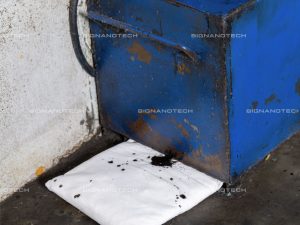
- Quickly handles oil leaks on-site (under machinery, pipelines, or narrow gaps).
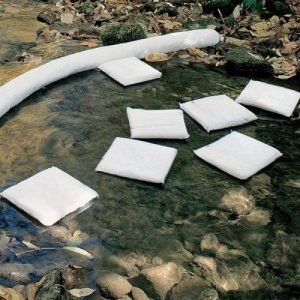
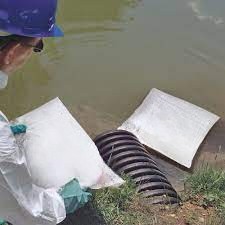
- Collects oil sheens on water surfaces or in containment tanks.
- Is easy to store and deploy, supporting the demonstration of “4 on-site” capabilities.
- Helps businesses reduce risks during inspections or actual incidents.
Equipping N-Fiber oil absorbent pillows together with complementary products (absorbent pads and absorbent booms) from the same Bignanotech ecosystem makes the response plan more practical and easier to approve.
4. Specific Benefits That Meet Customer Needs
Industrial customers typically prioritize response speed, long-term cost, ease of use, and legal compliance. The N-Fiber oil absorbent pillow directly addresses these:
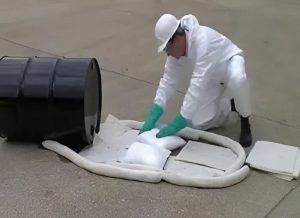
- Hard-to-reach locations: Compact sizes (especially W20 and W23) allow placement under machinery, in narrow gaps, under equipment feet, or in ship bilges — areas where flat absorbent pads or floating booms are less effective.
- Cost savings: Multiple reuses + competitive pricing due to domestic production significantly reduce costs compared to single-use imported products. Many businesses report 40–60% savings in long-term material costs.
- Operational safety: Does not absorb water, so it does not swell or create secondary slippery conditions. Anti-static properties make it suitable for fire-risk areas.
- Environmental protection: Reduces oil spreading into soil and water, and supports oil recovery for recycling.
- Easy monitoring and training: Operators only need to observe the color change to know when the oil absorbent pillow is saturated.
5. Detailed Real-World Applications by Industry
- Manufacturing plants and mechanical workshops: Place under presses, CNC machines, and hydraulic systems to absorb daily oil leaks. Reduces machine downtime and cleaning costs.
- Auto repair garages and gas stations: Handles drips of lubricating oil and hydraulic oil, keeping floors dry.
- Seaports, fuel depots, and vessels: Float on water surfaces to collect oil sheens or place in bilge compartments.
- Aquaculture: Absorbs oil from generators and aeration pumps that fall into ponds, protecting shrimp and fish.
- Thermal power plants and heavy industrial zones: Handles turbine oil or lubricating oil at elevated temperatures.
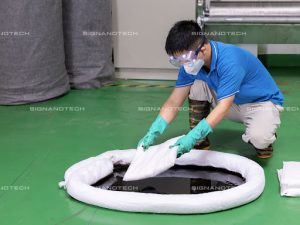
- Emergency spill response: Combine with N-Fiber oil absorbent booms for rapid containment and recovery.
6. Detailed Usage Instructions and Important Notes
Basic procedure:
- Identify the leak location or oil sheen.
- Place the oil absorbent pillow directly on the oil surface (or float it on water).
- Wait 2–10 minutes depending on the model and oil type; monitor the color change.
- Remove the oil absorbent pillow when saturated.
- Wring to recover oil (by hand or industrial press) if reusing.
- Store clean oil absorbent pillows in a dry place or transfer used ones to a hazardous waste treatment unit at the end of their service life.
Important notes:
- Not suitable for strong acids or highly corrosive chemicals.
- For heavy fuel oil (FO), combine with oil absorbent pads for better results.
- Always wear gloves and safety glasses.
- Do not burn oil-saturated oil absorbent pillows directly.
7. Comparison with Imported Products and Conventional Products
| Criterion | N-Fiber Oil Absorbent Pillow by Bignanotech | Imported Products (USA/Australia) | Conventional Polypropylene Products |
|---|---|---|---|
| Absorption ratio | 25–30 times | 15–25 times | 10–18 times |
| Selectivity | Oil only, no water absorption | Good | Often absorbs water as well |
| Reusability | 3–5 times or more | 1–3 times | Low or none |
| Delivery time | 1–3 days nationwide | 30–90 days | Fast |
| Long-term cost | Low | High | Medium |
| Technical support | 24/7 in Vietnamese | Mainly in English | Limited |
8. Frequently Asked Questions (FAQ)
Does the N-Fiber pillow really not absorb water?
Yes. The water absorption rate is nearly zero thanks to nano hydrophobic technology.
How many times can it be reused?
Typically 3–5 times with common oils. With light oils and proper wringing, it can be higher.
Is the product suitable for inclusion in response plans under Decision 04/2026?
Yes. It is a specialized absorbent material appropriate for minimum equipment lists.
How does the price compare to imported products?
Significantly lower due to domestic production, with no import duties or international logistics costs.
Does Bignanotech provide support for developing response plans?
Yes. The technical team offers free consultation on model selection and building a complete material kit suitable for the facility’s scale.
Conclusion: A Smart Choice for 2026 and Beyond
The N-Fiber Oil Absorbent Pillow by Bignanotech combines Japanese nano technology with domestic manufacturing to deliver high performance, reasonable cost, and practical support for compliance with Decision 04/2026/QĐ-TTg. The product is especially effective in hard-to-reach locations where conventional solutions struggle.
Take proactive action today to protect the environment, safeguard production operations, and be fully prepared for any legal inspection requirements.
Contact for consultation and orders:
- Official Website: bignanotech.com
- Hotline: 0879 808 080/ 094 386 7099/ 0868 939 595
- Email: sales@bignanotech.com
- Follow: Facebook Bignanotech , Youtube Bignanotech & Tiktok Bignanotech
Bignanotech is ready to provide sample testing, technical consultation, and fast nationwide delivery. Do not let oil leak risks affect your operations.