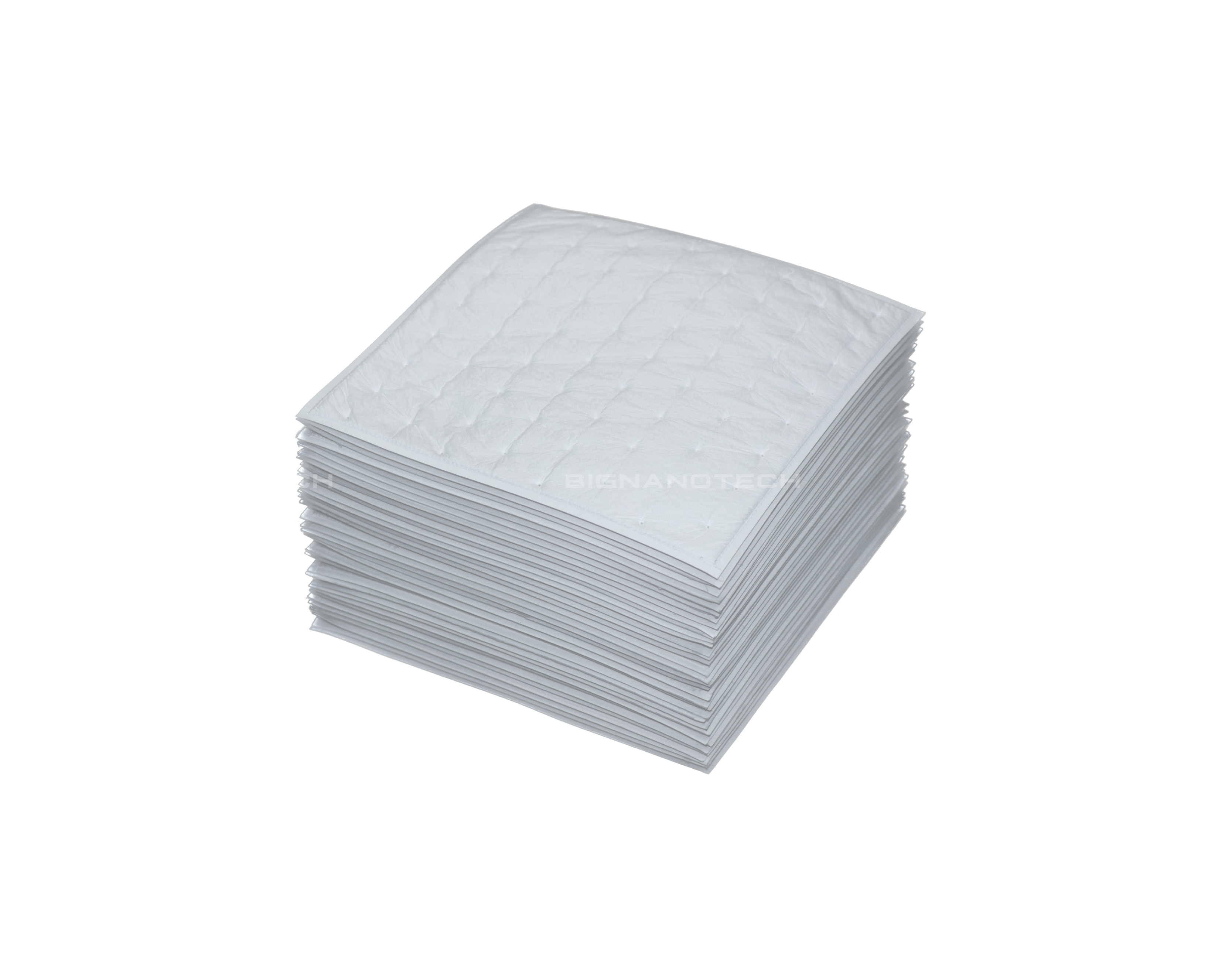

N-Fiber Oil Absorbent Pad by Bignanotech: Detailed Information to Support Businesses in Preparing for Oil Spill Response under Decision 04/2026
From February 10, 2026, Decision 04/2026/QD-TTg on the Regulation on Oil Spill Response Operations officially took effect. This regulation provides clearer requirements regarding the responsibilities of facilities at risk of oil spills, including the development of response plans and the preparation of appropriate equipment and materials. Among the materials commonly included by businesses in their plans, oil absorbent pads are widely used for handling oil spills on factory floors and water surfaces.
The N-Fiber oil absorbent pad is manufactured in Vietnam by Bignanotech. The product is made from polypropylene using nano-fiber technology and is designed to support businesses in collecting spilled oil and limiting its spread when incidents occur.

1. Structure and Working Principle Of N-Fiber Oil Absorbent Pad
The N-Fiber oil absorbent pad is formed from fine polypropylene fibers that create a network structure with numerous voids. This structure enables the product to absorb hydrocarbon-based substances such as gasoline, diesel oil (DO), fuel oil (FO), engine oil, hydraulic oil, and certain oil-based solvents.
A key feature is its selective absorption: the product limits water uptake. According to technical data, the water absorption rate after 30 minutes of contact is typically ≤ 0.02 times the weight of the pad. When used on water surfaces, the pad can remain afloat while absorbing oil.
Reference absorption times:
- Absorption begins after approximately 2–5 seconds.
- Saturation is reached in approximately 3–5 minutes, depending on the type of oil, the thickness of the oil layer, and ambient temperature conditions.
As the pad absorbs oil, its color changes from white to a darker shade. This characteristic helps users identify the saturation level for timely replacement.

2. Technical Specifications of Popular Models
Below is reference information on some commonly used models:
| Model | Dimensions | Approximate Thickness | Approximate Weight | Approximate DO Oil Absorption Capacity | Packaging | Main Applications |
|---|---|---|---|---|---|---|
| P30 | 30 × 30 cm | 5 mm | 23–27 g | approximately 0.8–0.85 liters | 100 pads/carton | Small incidents, tool wiping, garages |
| P40 | 40 × 40 cm | 5 mm | 42–48 g | approximately 1.2–1.4 liters | 100 pads/carton | Factory floors, machinery areas |
| P45 | 40 × 50 cm | 5 mm | 55–75 g | approximately 1.6–1.7 liters | 100 pads/carton | Warehouses, parking lots, medium-sized areas |
| P50 | 50 × 50 cm | 5 mm | 70–100 g | approximately 2.1–2.3 liters | 100 pads/carton | Water surfaces, areas requiring higher absorption |
The average oil absorption capacity is approximately 14–18 times the weight of the pad, depending on the type of oil. Lighter oils are generally absorbed in higher quantities than high-viscosity oils. The product can be wrung out and reused multiple times (typically 3–5 times), with efficiency gradually decreasing after each use.
In addition, the pad is treated for anti-static properties and can withstand temperatures ranging from –40°C to +120°C, making it suitable for certain industrial environments with safety requirements.

3. Usage in Practical Situations
On factory floors or in garages
Place the pad directly on the oil-affected area. Wait a few minutes for the oil to be absorbed. Once the pad changes color, collect it and place it in a designated container for oily waste in accordance with regulations. If residual oil remains, use a new pad.
Under machinery or at frequently leaking points
The pad can be cut into smaller sizes and placed under machines in advance. When oil drips, the pad will gradually absorb it, helping to limit spread onto the floor.
On water surfaces
Place the pad on the surface with the oil sheen. The pad will absorb the oil while remaining afloat. After saturation, retrieve it using appropriate tools and handle it according to oily waste regulations.
Combination in response material kits
Businesses often combine oil absorbent pads with absorbent pillows and containment booms to form a flexible set of materials suitable for various incident levels according to the facility’s response plan.

4. Supporting Role in Compliance with Decision 04/2026
Decision 04/2026 requires facilities to proactively prepare materials and response measures, with priority given to preventing the spread of oil from the source. Having oil absorbent pads available in the materials inventory helps businesses:
- Meet the minimum equipment requirements in their response plans.
- Carry out rapid on-site handling of small or medium incidents.
- Facilitate documentation and reporting of preparedness activities when inspections are required.
As a domestically produced product, it supports convenient periodic replenishment and stable inventory maintenance.
5. Storage Guidelines and Usage Notes
- Store in a dry place, away from direct sunlight for extended periods.
- Regularly check the quantity and condition of pads in storage.
- After use, collect and dispose of them in accordance with current regulations on oily waste.
- When reusing, wring out the oil thoroughly before reuse and monitor absorption performance.
- Do not use for highly corrosive chemicals or concentrated acids.
6. Conclusion
The N-Fiber oil absorbent pad is a material that supports businesses in collecting spilled oil on floors and water surfaces. With specific technical specifications, selective absorption capability, and practical usability, the product can be included in the list of response materials required under Decision 04/2026.
- Official Website: bignanotech.com
- Hotline: 0879 808 080/ 094 386 7099/ 0868 939 595
- Email: sales@bignanotech.com
- Follow: Facebook Bignanotech , Youtube Bignanotech & Tiktok Bignanotech
Businesses that are developing or reviewing their oil spill response plans may consider selecting models appropriate to the scale and risk characteristics of their facilities. For further details on technical specifications, model selection, or support in building a materials list, businesses may contact Bignanotech directly.